Table of Contents
- Why Understanding Manufacturing Matters
- What Does a Yoga Accessories Manufacturer Do?
- The Complete Manufacturing Process
- Raw Material Selection
- Product Development & Sampling
- Fabric Cutting & Stitching
- Choosing the Right Supplier
- Filling & Assembly
- Branding & Customization
- Quality Control
- Packaging & Export
- OEM Manufacturing
- FAQs
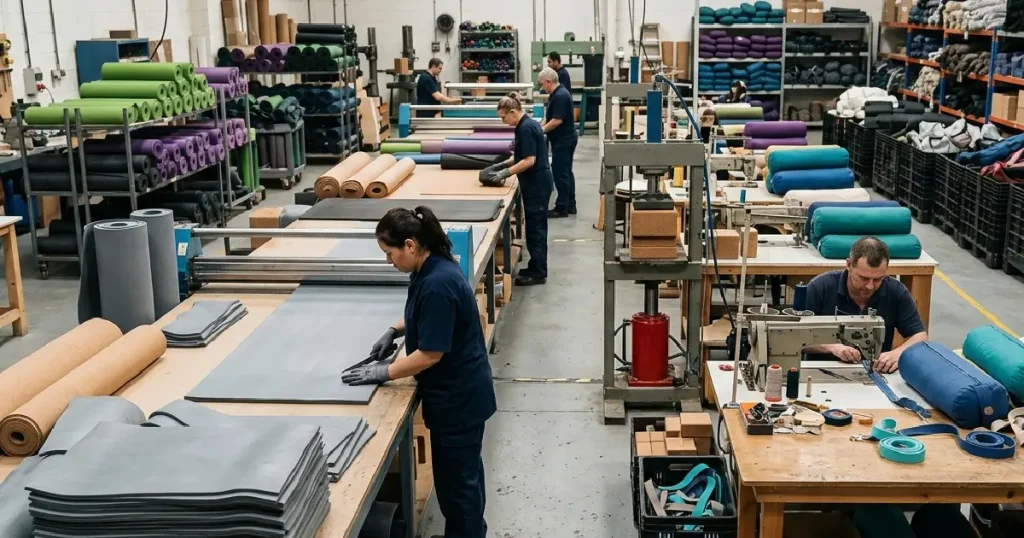
From Raw Materials to Ready-to-Ship Products: A Complete Manufacturing Guide for Wholesale Buyers
Did you know that nearly 40% of product quality issues in wholesale manufacturing can be traced back to poor raw material selection and inadequate production processes—not the final inspection? That’s a surprising statistic for businesses investing in wholesale yoga accessories, where durability, comfort, and consistency directly influence customer satisfaction and brand reputation.
Whether you’re a yoga studio owner, equipment retailer, wellness brand, distributor, or retreat operator, understanding how a professional yoga accessories manufacturer transforms raw materials into premium yoga products helps you make smarter purchasing decisions. From selecting the right fabrics and fillings to implementing strict quality control and custom branding, every manufacturing step plays a critical role in delivering products that customers trust.
Think of manufacturing like practicing yoga. Skip one pose, and your balance suffers. Skip one manufacturing step, and your customer might be wondering why their brand-new yoga bolster looks more like a lumpy pillow. Thankfully, experienced manufacturers don’t take shortcuts.
In this comprehensive guide, we’ll explore the complete manufacturing journey of wholesale yoga accessories, including Yoga Blankets, Yoga Bolsters, Yoga Mat Bags, Yoga Rugs, and other premium yoga products wholesale. You’ll learn how professional factories maintain quality, support OEM manufacturing, implement sustainable practices, and prepare products for international export.
Why Understanding the Manufacturing Process Matters
Many buyers focus primarily on pricing when sourcing wholesale yoga accessories, but experienced importers understand that the manufacturing process is what truly determines long-term product quality. Two products may appear identical in photographs yet perform very differently due to differences in raw materials, workmanship, and quality control procedures.
Understanding the production journey allows buyers to ask better questions, evaluate suppliers more effectively, and identify manufacturers capable of consistently producing premium products. This knowledge also helps businesses distinguish between genuine manufacturing expertise and simple trading companies that outsource production without maintaining direct quality oversight.
For yoga studios and wellness brands, this understanding translates into better purchasing decisions, stronger customer satisfaction, and fewer costly quality issues after products reach the market.
What Does a Yoga Accessories Manufacturer Do?
A yoga accessories manufacturer is responsible for designing, producing, inspecting, packaging, and preparing yoga-related products for domestic and international distribution. Unlike wholesalers who simply purchase finished inventory, manufacturers oversee every stage of production—from sourcing raw materials to applying custom branding and preparing export shipments.
Professional manufacturers often produce a wide range of yoga products, including:
- Yoga Blankets
- Yoga Bolsters
- Yoga Mat Bags
- Yoga Rugs
- Yoga Straps
- Meditation Cushions
- Sand Bags
- Neti Pots
- Eye Pillows
- Yoga Props
- Cotton Tote Bags
- Wellness Accessories
Many manufacturers also provide OEM (Original Equipment Manufacturing) and private-label services, enabling businesses to create exclusive branded collections with customized colors, logos, packaging, and product specifications.
The Journey of Wholesale Yoga Accessories: From Concept to Customer
Manufacturing premium yoga products involves far more than stitching fabric together. Every accessory passes through multiple carefully controlled stages designed to ensure consistency, durability, and customer satisfaction.
The typical production process includes:
- Product research
- Product design
- Raw material sourcing
- Material inspection
- Pattern development
- Cutting
- Stitching
- Filling
- Branding
- Quality inspection
- Packaging
- Export preparation
Each stage contributes to the overall quality of the finished product while reducing manufacturing errors and improving production efficiency.
Step 1: Product Research & Development
Every successful product begins with thoughtful planning. Before manufacturing starts, experienced yoga equipment manufacturers invest time understanding customer requirements, current wellness trends, retail expectations, and functional performance needs.
Research includes evaluating:
- Market demand
- Customer preferences
- Product functionality
- Material options
- Manufacturing feasibility
- Pricing expectations
- Sustainability goals
- Competitive analysis
Rather than copying existing products, leading manufacturers continually refine designs to improve durability, comfort, appearance, and production efficiency.
For businesses developing private-label collections, this stage often includes collaborative discussions regarding dimensions, branding, packaging, and target retail pricing.
Understanding Customer Requirements
Different customers require different product characteristics.
For example:
Yoga Studios
Often prioritize:
- Durability
- Easy maintenance
- Commercial-grade construction
- Washable fabrics
Retail Stores
Typically focus on:
- Attractive appearance
- Premium packaging
- Broad color selection
- Competitive pricing
Wellness Brands
Frequently emphasize:
- Organic materials
- Sustainable manufacturing
- Private labeling
- Luxury presentation
Understanding these differences allows manufacturers to develop products aligned with specific market segments.
Step 2: Raw Material Sourcing
Raw materials form the foundation of every premium yoga accessory. Regardless of how advanced the manufacturing process becomes, poor-quality materials inevitably produce inferior products.
Professional yoga accessories manufacturers carefully evaluate suppliers before purchasing fabrics, fillings, hardware, and packaging materials. Consistency, sustainability, durability, and compliance with international quality standards all influence sourcing decisions.
Common raw materials include:
Fabrics
- Cotton Canvas
- Organic Cotton
- Cotton Twill
- Linen
- Velvet
- Polyester
- Recycled Fabrics
Fillings
For products like Yoga Bolsters, manufacturers commonly use:
- Cotton batting
- Recycled cotton fiber
- Kapok
- Buckwheat hulls
- Polyester fiber
- Foam
Each filling offers unique characteristics affecting firmness, comfort, weight, and durability.
Hardware
Accessories such as Yoga Mat Bags often require:
- Zippers
- Buckles
- D-rings
- Metal hooks
- Cotton ropes
- Adjustable straps
Choosing premium hardware significantly improves product longevity and user satisfaction.
Sustainable Material Selection
Environmental responsibility has become increasingly important throughout the wellness industry. Many buyers actively seek manufacturers capable of producing sustainable wholesale yoga accessories using environmentally responsible materials.
Popular eco-friendly options include:
- Organic cotton
- Recycled cotton
- Hemp
- Natural dyes
- Recycled polyester
- Biodegradable packaging
- Reusable cotton bags
Manufacturers investing in sustainable sourcing help brands meet growing consumer demand for ethical wellness products while reducing environmental impact.
Step 3: Material Inspection & Quality Testing
Before production begins, every shipment of raw materials undergoes comprehensive inspection. This preventive approach identifies potential issues before they affect manufacturing quality.
Material inspection typically evaluates:
Fabric Inspection
- Color consistency
- Fabric weight
- Weaving density
- Surface defects
- Shrinkage
- Tensile strength
Filling Inspection
Manufacturers verify:
- Weight
- Density
- Moisture content
- Cleanliness
- Uniformity
- Odor
Hardware Inspection
Every zipper, buckle, D-ring, and metal fitting should undergo inspection for:
- Strength
- Finish quality
- Corrosion resistance
- Functionality
- Dimension accuracy
Identifying defective materials before production begins saves significant time while reducing manufacturing waste.
Sample Development: Turning Ideas into Products
Before mass production begins, manufacturers typically create product samples for customer approval. Sample development allows businesses to evaluate materials, dimensions, stitching, branding, packaging, and overall appearance before investing in large production runs.
During this stage, manufacturers often refine:
- Product dimensions
- Stitch placement
- Fabric combinations
- Logo positioning
- Color matching
- Packaging design
Sample approval establishes the quality benchmark for future production while minimizing misunderstandings between buyer and manufacturer.
Why Sampling Saves Money
Although product samples require additional time and investment, they frequently prevent expensive production errors. Correcting issues during sample development costs far less than replacing thousands of finished products after manufacturing.
Experienced buyers treat samples as essential quality assurance rather than optional expenses. Evaluating physical products provides insights that photographs simply cannot reveal, including fabric texture, filling density, stitching quality, and overall craftsmanship.
The Importance of Standard Operating Procedures (SOPs)
Professional yoga equipment manufacturers rely on documented Standard Operating Procedures (SOPs) to ensure every production stage follows consistent quality standards. SOPs specify material handling, stitching methods, filling quantities, inspection criteria, packaging requirements, and safety protocols.
These standardized procedures reduce production variability while enabling factories to produce thousands of identical products with consistent quality. For wholesale buyers, this consistency is especially important when placing repeat orders or expanding into new international markets.
Step 4: Fabric Cutting & Material Preparation
Once raw materials pass inspection and customer samples receive approval, the manufacturing process moves to fabric cutting. This stage may appear straightforward, but it plays a crucial role in determining product consistency, reducing waste, and maintaining production efficiency. Even a slight error during cutting can affect product dimensions, stitching alignment, and overall appearance.
Professional yoga accessories manufacturers use carefully prepared cutting patterns that match approved product specifications. Depending on production volume, cutting may be performed manually by skilled workers or using computerized cutting machines for higher precision. Every cut is verified against technical drawings to ensure consistency across thousands of units.
For products such as Yoga Blankets, Yoga Mat Bags, Yoga Bolsters, and Yoga Rugs, manufacturers optimize fabric layouts to maximize material utilization while minimizing waste. Efficient fabric planning not only reduces production costs but also supports more sustainable manufacturing practices by lowering textile waste.
Activities During Fabric Cutting
- Fabric spreading
- Pattern alignment
- Precision cutting
- Component sorting
- Quality verification
- Batch identification
- Material tracking
Proper material preparation ensures that every production stage following cutting proceeds smoothly and efficiently.
Preparing Different Yoga Accessories for Production
Each yoga accessory requires unique preparation before assembly begins. Product-specific processes help ensure functionality, comfort, and durability.
Yoga Blankets
Manufacturers inspect edge alignment, weave consistency, and fabric dimensions before preparing blankets for hemming and finishing.
Yoga Bolsters
Fabric panels are cut according to bolster shape, while handles, zippers, and piping components are prepared separately for later assembly.
Yoga Mat Bags
Multiple components—including body panels, pockets, straps, handles, and closures—are individually cut before being assembled into finished bags.
Yoga Rugs
Cotton weaving is inspected carefully before trimming and preparing edge finishing to prevent fraying during long-term use.
Each preparation step contributes to consistent product quality throughout the production process.
Step 5: Stitching & Assembly
Stitching represents one of the most critical stages of manufacturing because it determines structural strength, durability, and overall product appearance. Professional factories employ experienced sewing operators trained to work with different materials, thread types, and product designs.
Industrial sewing machines produce strong, uniform stitching capable of withstanding years of regular use. Reinforced seams are especially important for commercial yoga products because studios and wellness centers often use accessories multiple times each day.
Manufacturers carefully monitor stitch density, thread tension, seam alignment, and reinforcement points throughout production. These quality controls reduce defects while ensuring every product performs consistently regardless of production volume.
Specialized Stitching Techniques
Different products require different construction methods.
Flat Stitching
Commonly used for lightweight accessories requiring clean, professional seams.
Reinforced Double Stitching
Frequently applied to Yoga Mat Bags and carrying straps where higher strength is required.
Box Stitch Reinforcement
Used around handles, shoulder straps, and load-bearing attachment points to improve durability.
Decorative Stitching
Premium collections may include decorative topstitching that enhances product appearance while reinforcing structural integrity.
Professional stitching combines aesthetics with functionality, creating products that look attractive while performing reliably.
Step 6: Filling Yoga Bolsters and Cushions
Products such as Yoga Bolsters require specialized filling processes that directly influence comfort, support, and long-term durability. Filling consistency is one of the defining characteristics separating premium manufacturers from lower-quality suppliers.
Manufacturers carefully weigh filling materials to ensure every bolster meets specified firmness and weight requirements. Uneven filling may create uncomfortable pressure points while reducing product lifespan.
Popular filling materials include:
- Cotton batting
- Recycled cotton
- Polyester fiber
- Kapok
- Buckwheat hulls
- Foam
Each material offers unique performance characteristics suited to different yoga practices and customer preferences.
Maintaining Filling Consistency
Professional factories establish standardized filling procedures to maintain consistent firmness throughout production.
Operators verify:
- Filling weight
- Distribution uniformity
- Product dimensions
- Compression levels
- Shape consistency
These inspections ensure every yoga bolster wholesale product delivers the same level of comfort and support.
Step 7: Embroidery, Printing & Custom Branding
Private-label manufacturing has become one of the fastest-growing segments of the wellness industry. Businesses increasingly seek customized products that strengthen brand recognition while differentiating themselves from generic competitors.
Experienced yoga accessories manufacturers typically offer comprehensive branding services covering logos, labels, packaging, and customized product designs.
Common customization options include:
Embroidery
Ideal for premium branding on Yoga Mat Bags, bolsters, and cotton accessories.
Screen Printing
Suitable for logos, graphics, instructional markings, and promotional messaging.
Woven Labels
Provide a professional appearance while reinforcing brand identity.
Heat Transfer Printing
Useful for detailed graphics requiring vibrant colors and precision.
Hang Tags
Custom hang tags communicate brand values, product information, and care instructions.
Strong branding transforms functional yoga products into memorable customer experiences.
Private Label Manufacturing Process
OEM and private-label manufacturing generally follows these steps:
- Customer consultation
- Product selection
- Material confirmation
- Design approval
- Sample development
- Branding approval
- Mass production
- Final inspection
- Packaging
- Export
This structured process minimizes misunderstandings while ensuring finished products accurately reflect the customer’s brand identity.
Step 8: Multi-Stage Quality Control
Quality control is not a single inspection performed at the end of production. Professional yoga equipment manufacturers implement quality monitoring throughout every manufacturing stage.
Continuous inspections help identify problems before they affect large production volumes, reducing waste while improving efficiency.
Incoming Material Inspection
Raw materials undergo inspection before entering production.
In-Process Inspection
Products are evaluated throughout cutting, stitching, filling, and assembly.
Final Product Inspection
Finished products receive comprehensive quality verification before packaging.
Pre-Shipment Inspection
Completed orders undergo random sampling to confirm compliance with customer specifications before export.
This layered quality control system significantly reduces manufacturing defects.
What Does Quality Control Evaluate?
Professional inspections typically include:
- Product dimensions
- Stitch quality
- Color consistency
- Fabric defects
- Filling weight
- Hardware functionality
- Logo placement
- Packaging accuracy
- Label verification
- Carton quality
Every inspection contributes to maintaining consistent product standards across entire production runs.
Step 9: Packaging & Labeling
Packaging protects products during transportation while creating positive first impressions for customers. Increasingly, packaging also reflects brand values related to sustainability and premium presentation.
Professional manufacturers offer multiple packaging solutions depending on customer requirements.
Popular options include:
- Individual polybags
- Cotton dust bags
- Kraft paper packaging
- Printed retail boxes
- Corrugated export cartons
- Recyclable packaging
- Custom hang tags
- Barcode labels
- Care instruction inserts
Proper packaging minimizes transportation damage while improving the customer unboxing experience.
Sustainable Packaging Trends
As consumer awareness grows, environmentally responsible packaging has become increasingly important.
Many manufacturers now offer:
- Plastic-free packaging
- Recycled paper cartons
- Soy-based printing inks
- Cotton drawstring bags
- Reusable packaging
- FSC-certified paper
These initiatives help businesses align with sustainability goals while reducing environmental impact.
Step 10: Warehouse Management & Export Preparation
Once products pass final inspection, they move into warehouse storage before shipment. Organized warehouse management ensures inventory accuracy while protecting finished products from moisture, dust, and handling damage.
Warehouse teams verify:
- Product quantities
- Carton labels
- Shipment documentation
- Export markings
- Pallet organization
- Container loading plans
Accurate warehouse operations reduce shipping errors while improving delivery efficiency.
Preparing Products for International Export
International shipments require careful preparation beyond simple packaging.
Manufacturers verify:
- Commercial invoices
- Packing lists
- Country of origin documentation
- Shipping marks
- Carton numbering
- Export labels
- Container loading plans
Experienced exporters understand destination-specific requirements, helping first-time importers avoid customs delays.
How Manufacturers Reduce Production Waste
Modern yoga accessories manufacturers increasingly focus on lean manufacturing practices that improve efficiency while reducing environmental impact.
Waste reduction strategies include:
- Optimized fabric layouts
- Digital pattern making
- Material recycling
- Energy-efficient equipment
- Water conservation
- Production planning software
These improvements lower manufacturing costs while supporting sustainable business practices.
Technology Is Transforming Yoga Accessories Manufacturing
Traditional craftsmanship remains valuable, but technology now plays an important role throughout production.
Modern factories increasingly use:
- Computerized cutting systems
- Automated embroidery
- Digital quality inspection
- Inventory management software
- Barcode tracking
- ERP production systems
These technologies improve consistency while enabling manufacturers to produce larger volumes without sacrificing quality.
Sustainable Manufacturing Practices Used by a Modern Yoga Accessories Manufacturer
Sustainability has evolved from a marketing advantage to a core expectation within the global wellness industry. Today’s yoga practitioners, retailers, and wellness brands actively seek products that are manufactured responsibly without compromising quality or performance. As a result, every forward-thinking yoga accessories manufacturer is investing in environmentally conscious production methods that reduce waste, conserve natural resources, and support ethical supply chains.
Professional manufacturers begin sustainability at the sourcing stage by selecting responsibly produced cotton, recycled fibers, natural dyes, and biodegradable packaging materials. Throughout production, factories optimize cutting layouts to minimize fabric waste, recycle production scraps whenever possible, and implement energy-efficient machinery that lowers electricity consumption. These improvements not only reduce environmental impact but also increase operational efficiency, creating long-term value for both manufacturers and wholesale buyers.
Sustainable Manufacturing Initiatives
- Organic cotton sourcing
- Recycled cotton and polyester fabrics
- Water-saving dyeing processes
- Eco-friendly inks
- Biodegradable packaging
- Recyclable shipping cartons
- Fabric waste recycling
- Energy-efficient machinery
- Reduced plastic packaging
- Responsible sourcing partnerships
Businesses purchasing wholesale yoga accessories from environmentally responsible manufacturers strengthen their own sustainability commitments while appealing to increasingly eco-conscious customers.
Ethical Manufacturing and Social Responsibility
Responsible manufacturing extends beyond environmental practices. Ethical production also includes safe working conditions, fair wages, employee training, and compliance with labor regulations. International buyers increasingly evaluate manufacturing partners based not only on product quality but also on their commitment to ethical business practices.
Professional yoga equipment manufacturers invest in workforce development by providing ongoing skills training, maintaining safe production environments, and implementing standardized operating procedures that prioritize employee well-being. These practices contribute to higher product quality because experienced, motivated workers consistently produce better results than unstable workforces with frequent turnover.
For wellness brands, partnering with ethically responsible manufacturers reinforces brand credibility while meeting the expectations of customers who value transparency and responsible sourcing.
Common Manufacturing Mistakes Buyers Should Avoid
Many first-time buyers assume that manufacturing quality depends solely on the factory. In reality, successful production requires active collaboration between the buyer and the manufacturer. Poor communication, incomplete specifications, and unrealistic timelines often create avoidable production challenges.
One of the most common mistakes is providing vague product requirements. Details such as dimensions, fabric weight, filling density, logo placement, packaging specifications, and color references should be documented clearly before production begins. Ambiguity increases the likelihood of misunderstandings and delays.
Another frequent mistake is skipping sample approval. While product samples require additional time, they provide an invaluable opportunity to verify quality before mass production begins. Correcting issues during sampling is significantly easier and less expensive than replacing large production batches after shipment.
Mistakes to Avoid
- Choosing suppliers based only on price
- Skipping product samples
- Providing incomplete specifications
- Ignoring quality inspections
- Overlooking packaging requirements
- Failing to verify production timelines
- Not reviewing branding proofs
- Assuming all materials are identical
- Waiting until final inspection to identify issues
Avoiding these mistakes improves manufacturing efficiency while protecting your investment.
Why India Is a Global Leader in Yoga Accessories Manufacturing
India has earned a strong international reputation as a preferred destination for manufacturing wholesale yoga accessories. As the birthplace of yoga, the country combines centuries of textile craftsmanship with modern production capabilities, making it uniquely positioned to serve global wellness markets.
Indian manufacturers specialize in producing premium Yoga Blankets, Yoga Bolsters, Yoga Mat Bags, Yoga Rugs, Yoga Straps, meditation accessories, and other wellness products using high-quality cotton, sustainable materials, and skilled craftsmanship. Combined with competitive production costs and extensive export experience, these strengths make India a trusted sourcing destination for yoga studios, retailers, distributors, and wellness brands around the world.
Many international buyers also appreciate the flexibility offered by Indian manufacturers, including low-to-moderate MOQs, OEM services, private-label manufacturing, custom packaging, and worldwide shipping support.
Future Trends in Wholesale Yoga Accessories Manufacturing (2026–2028)
The manufacturing landscape continues to evolve rapidly as technology, sustainability, and changing consumer expectations reshape the wellness industry. Businesses that understand these emerging trends will be better positioned to build competitive product portfolios and long-term supplier relationships.
1. Sustainable Materials Will Become the Industry Standard
Demand for organic cotton, recycled textiles, natural dyes, and biodegradable packaging will continue to rise. Consumers increasingly prefer brands that demonstrate environmental responsibility throughout the manufacturing process.
2. Smart Manufacturing Technologies
Leading yoga equipment manufacturers are adopting digital production planning, automated cutting systems, AI-assisted quality inspections, and ERP software to improve production efficiency and reduce errors. These technologies enable greater consistency across large wholesale orders while shortening lead times.
3. Increased Demand for Private Label Manufacturing
Retailers and wellness brands are investing heavily in customized product collections to strengthen brand identity. Personalized logos, custom dimensions, premium packaging, and exclusive product colors are becoming standard expectations within the wholesale market.
4. Coordinated Wellness Collections
Instead of purchasing individual products, customers increasingly seek complete wellness collections that include:
Manufacturers capable of producing coordinated product lines provide additional value by simplifying sourcing and ensuring design consistency.
5. Greater Supply Chain Transparency
Businesses increasingly expect visibility throughout production, including digital order tracking, quality reports, production updates, and shipment monitoring. Manufacturers embracing transparent communication strengthen customer confidence while improving long-term partnerships.
How are wholesale yoga accessories manufactured?
Wholesale yoga accessories are manufactured through a structured process that includes product design, raw material sourcing, material inspection, fabric cutting, stitching, filling, branding, quality control, packaging, warehouse management, and export preparation. Professional manufacturers follow standardized quality procedures at every stage to ensure consistent, durable, and internationally compliant products.
Key Takeaways
- High-quality manufacturing begins with premium raw materials.
- Product sampling is essential before mass production.
- Multi-stage quality control reduces defects and improves consistency.
- Sustainable manufacturing supports both environmental responsibility and long-term business value.
- OEM and private-label manufacturing help brands create exclusive product collections.
- India remains one of the world’s leading manufacturing destinations for yoga accessories.
- Strong manufacturer partnerships contribute to better pricing, reliable delivery, and continuous product improvement.
Conclusion
Behind every premium yoga accessory is a carefully managed manufacturing process built on precision, quality, and continuous improvement. From sourcing the finest raw materials to applying strict quality control, customized branding, and export-ready packaging, every stage contributes to the durability and performance your customers expect.
For businesses sourcing wholesale yoga accessories, understanding this process provides a significant advantage. It enables better supplier evaluation, more informed purchasing decisions, and stronger long-term partnerships. Whether you’re building a yoga studio, launching a wellness brand, expanding retail operations, or distributing products internationally, choosing an experienced yoga accessories manufacturer ensures consistency, scalability, and confidence in every order.
By partnering with a trusted manufacturer capable of producing complete collections—including Yoga Blankets, Yoga Bolsters, Yoga Mat Bags, Yoga Rugs, Yoga Straps, Neti Pots, Sand Bags, and other premium yoga products—you simplify sourcing while delivering a cohesive product range that strengthens your brand and meets the evolving needs of today’s wellness market.
Request Wholesale Catalog, Bulk Pricing Inquiry
Looking for a reliable Yoga Accessories Manufacturer for your business?
Whether you’re a Yoga Studio Owner, Yoga Equipment Retailer, Distributor, Yoga Retreat, or Wellness Brand, we offer complete manufacturing solutions designed to help your business grow with premium-quality products and dependable service.
Request Today
- Wholesale Product Catalog
- Bulk Pricing & Volume Discounts
- OEM & Private Label Manufacturing
- custom Logo, Colors & Packaging
- Worldwide Export & Shipping Support
- Flexible MOQ Options
- Strict Multi-Stage Quality Control
- Dedicated Wholesale Account Manager
Request your Wholesale Catalog and Bulk Pricing Inquiry today to explore our complete range of Yoga Blankets, Yoga Bolsters, Yoga Mat Bags, Yoga Rugs, Yoga Straps, Neti Pots, Sand Bags, and premium wholesale yoga accessories manufactured to international quality standards.
FAQs
A yoga accessories manufacturer designs, develops, produces, inspects, packages, and exports yoga-related products such as Yoga Blankets, Yoga Bolsters, Yoga Mat Bags, Yoga Rugs, straps, and wellness accessories. Many manufacturers also provide OEM and private-label services.
Purchasing wholesale yoga accessories directly from manufacturers reduces costs, improves product consistency, enables private labeling, and provides access to customization options that are generally unavailable through distributors or trading companies.
Manufacturers inspect raw materials, stitching, dimensions, hardware, filling, branding, packaging, and finished products throughout the production process. Multi-stage inspections ensure consistent quality before products are shipped to customers.
India combines authentic yoga heritage, experienced textile craftsmanship, competitive manufacturing costs, sustainable materials, and strong export infrastructure, making it a trusted source for premium wholesale yoga products.
Yes. Most professional manufacturers offer OEM and private-label services, including custom logos, embroidery, woven labels, packaging, color selection, product dimensions, and retail branding tailored to your business.
Popular products include Yoga Blankets, Yoga Bolsters, Yoga Mat Bags, Yoga Rugs, Yoga Straps, meditation cushions, eye pillows, Neti Pots, Sand Bags, and other yoga studio accessories designed for retail and commercial use.
Manufacturers typically use cotton canvas, organic cotton, recycled cotton, linen, polyester, hemp, velvet, natural fillings, recycled fibers, premium hardware, and eco-friendly packaging materials depending on the product category and customer requirements.
Production timelines depend on order quantity, customization, material availability, and factory capacity. Sample development, production, quality inspections, and shipping schedules all contribute to the overall lead time.
Quality control ensures that every product meets approved specifications for dimensions, durability, appearance, functionality, and branding. Consistent inspections reduce defects, improve customer satisfaction, and protect your brand reputation.
Select a manufacturer with proven experience, transparent communication, strong quality control systems, export expertise, sustainable manufacturing practices, OEM capabilities, and a broad product portfolio. Always review product samples before confirming mass production.