Table of Contents
- Why Do Australian Yoga Studios Need a Dedicated Teacher Training Equipment Plan?
- What Equipment Should Yoga Studios Include in a Teacher Training Setup?
- How Can Wholesale Yoga Supplies Australia Help Studios Manage Training Costs?
- How Should Studios Calculate Bulk Yoga Supplies for Each Training Batch?
- How Can Yoga Equipment Australia Support Different Training Formats?
- What Should Studios Check Before Choosing a Wholesale Yoga Supplies Supplier?
- How Can YogaSourcing Support Australian Yoga Studios?
- Frequently Asked Questions
- Conclusion
Introduction
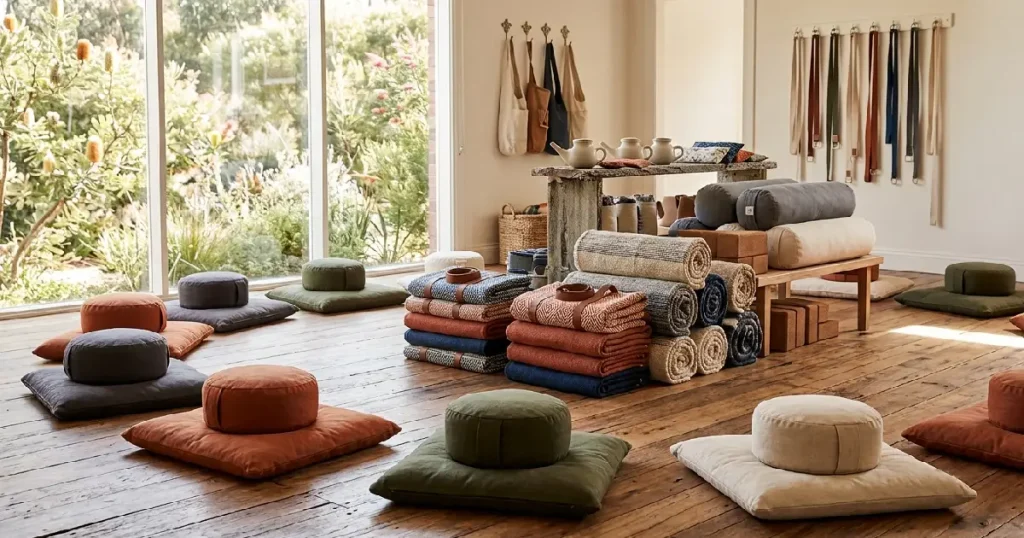
Running a yoga teacher training course involves more than preparing lesson plans and booking instructors. Studios must also ensure that trainees have access to suitable yoga mats, blocks, straps, bolsters, meditation cushions, and other essential equipment throughout their training.
For Australian yoga studio owners, organising these supplies can become challenging when courses have different group sizes, teaching formats, and practical requirements. Purchasing individual items whenever a new course begins can also make equipment planning time-consuming and inconsistent.
This is where wholesale yoga supplies Australia can help. By working with a B2B supplier, studios can plan equipment requirements in advance, source complementary products together, and build a reusable inventory for teacher training, workshops, and regular classes.
YogaSourcing supplies yoga props, meditation accessories, and other wellness products to Australian studios and businesses, with bulk ordering and selected customisation options. Studios can explore the available range through the Yoga Sourcing Australia supplier.
In this guide, we explain how Australian yoga studios can plan their training equipment, manage common sourcing problems, and use bulk yoga supplies to support a more organised learning environment.
1. Why Do Australian Yoga Studios Need a Dedicated Teacher Training Equipment Plan?
Teacher training courses often require a more structured equipment setup than a typical drop-in yoga class. Trainees may need to practise postures, explore modifications, learn how to use props safely, and participate in meditation or restorative sessions.
Without a dedicated plan, studios may find themselves short of essential equipment just when a course begins.
What equipment problems can yoga studios face during training courses?
Common challenges include:
- Insufficient equipment: There may not be enough blocks, straps, or bolsters for every trainee to practise comfortably.
- Inconsistent product types: Different equipment styles can make demonstrations and group practice less uniform.
- Last-minute purchasing: Ordering additional props close to the course date can create unnecessary pressure.
- Limited storage: Studios need to balance training equipment with the supplies required for their regular class timetable.
- Unplanned spending: Buying products in small quantities can make budgets more difficult to manage.
- Multiple teaching environments: Studios running workshops or off-site sessions may need portable equipment that is easy to organise and transport.
A planned approach to yoga supplies Australia allows studio owners to identify their recurring requirements before confirming a course schedule.
How can a dedicated equipment inventory improve the trainee experience?
A well-planned inventory helps instructors prepare demonstrations and practical sessions more consistently. Trainees can access the props required for exercises without repeatedly waiting for shared equipment.
It also helps the studio distinguish between its everyday class inventory, its teacher training supplies, and any additional products needed for specialist workshops.
Practical tip: Create an equipment checklist for each course format and review it before registrations open. This gives your team more time to source missing items and confirm delivery schedules.
2. What Equipment Should Yoga Studios Include in a Teacher Training Setup?
The ideal equipment mix depends on the course curriculum, teaching approach, available floor space, and number of trainees. Rather than ordering every possible yoga accessory, studios should start with products that serve clear teaching and practice needs.
Which yoga supplies are useful for practical training sessions?
Equipment | How it supports training |
Yoga mats | Provide a defined practice surface for demonstrations and individual practice. |
Yoga blocks | Help instructors demonstrate support options and modifications. |
Yoga straps or belts | Support demonstrations of alignment, mobility, and posture variations. |
Yoga bolsters | Can be used in restorative practice, supported postures, and relaxation sessions. |
Yoga blankets or rugs | Offer additional support and comfort where suitable for the session. |
Meditation cushions | Support seated meditation and breathwork practice. |
Mat bags or covers | Help organise, store, and transport equipment between locations. |
Not every course needs the same quantities of every product. For example, a course with a strong restorative yoga component may require more bolsters and blankets than a course focused primarily on standing postures.
Why should yoga studios choose equipment based on the curriculum?
The curriculum should determine the equipment list, not the other way around.
Before placing a bulk order, course coordinators can review the syllabus and identify which props will be needed for:
- Instructor demonstrations.
- Individual trainee practice.
- Partner exercises and peer teaching.
- Restorative or meditation sessions.
- Practical assessments and teaching simulations.
This approach helps studios source relevant bulk yoga supplies rather than filling storage space with equipment that receives little use.
Should studios buy identical props for every trainee?
Where possible, using consistent product types can simplify group demonstrations and equipment management. However, studios may still need different sizes, styles, or support options depending on the students and the course activities.
The goal is to establish a practical core inventory while keeping enough flexibility for different teaching needs.
3. How Can Wholesale Yoga Supplies Australia Help Studios Manage Training Costs?
Teacher training equipment is an investment that may serve multiple groups over time. A thoughtful purchasing plan can help studios avoid repeated small orders and make better use of their available budget.
Why can wholesale yoga supplies be useful for teacher training?
Wholesale sourcing allows a studio to request pricing for a planned group of products instead of purchasing every item separately. Depending on the supplier and order size, businesses may be able to access volume-based pricing and consolidate product selection.
Potential advantages include:
- More predictable purchasing
Studios can estimate their equipment needs before the course starts and allocate a budget to the planned order.
- Better inventory planning
Buying the right quantities together can reduce the need for repeated emergency purchases when a new training batch begins.
- A more consistent equipment setup
Sourcing compatible products together can make it easier to organise a uniform training environment.
- Opportunities to combine product categories
Studios can explore mats, blocks, straps, bolsters, and meditation accessories through a single B2B sourcing process, subject to the supplier’s range and availability.
- Easier planning for recurring courses
Reusable equipment can support future training batches, provided it remains in suitable condition and meets the studio’s requirements.
Does buying yoga equipment wholesale always reduce costs?
Not automatically. The best option depends on order quantities, product specifications, shipping, import charges where applicable, storage requirements, and expected usage.
A studio should compare the total cost of the order with the cost of purchasing smaller quantities locally. It should also avoid buying more equipment than it can reasonably use.
For Australian studios sourcing internationally, request a written quotation that clarifies product prices, minimum order quantities, shipping arrangements, production lead times, and any other applicable charges.
The objective is to improve purchasing efficiency—not simply to place the largest possible order.
4. How Should Studios Calculate Bulk Yoga Supplies for Each Training Batch?
Ordering too little equipment can disrupt practical sessions. Ordering too much can tie up funds and occupy valuable storage space.
A simple quantity-planning method helps studios estimate what they need before requesting a quote.
How many yoga props should a studio order for a teacher training course?
Start with the number of trainees, then consider the course activities and how equipment will be shared.
For example, a studio preparing for a training group of 20 people could use the following planning worksheet:
Equipment | Example planning quantity | What to consider |
Yoga mats | 20 | One per trainee if each person needs an individual mat. |
Yoga blocks | 40 | Two per trainee for sessions that use paired blocks. |
Yoga straps | 20 | One per trainee if the curriculum requires individual use. |
Meditation cushions | 20 | One per trainee if everyone participates in seated practice at the same time. |
Bolsters | 10–20 | Set the quantity according to restorative sessions and sharing arrangements. |
These are illustrative planning quantities, not universal requirements. The final order should reflect the curriculum, instructor recommendations, product specifications, and whether the studio already owns suitable equipment.
How can studios plan for existing inventory and future courses?
Before purchasing, divide the equipment list into three categories:
- Already available: Suitable equipment that the studio can continue using.
- Needs replenishment: Items that are worn, missing, or insufficient for the planned group.
- Needs to be added: Products required for new modules, teaching methods, or course formats.
Then estimate future use. If the studio plans to run several training batches throughout the year, reusable equipment may justify a larger initial order. If the course is a one-off event, a smaller order or suitable local rental arrangement may be more practical.
What should a yoga studio include in its supplier enquiry?
Prepare a clear request containing:
- Business name and delivery location in Australia.
- Course dates and expected number of trainees.
- Product types and requested quantities.
- Preferred sizes, colours, materials, or specifications.
- Branding or packaging requirements, if relevant.
- Required delivery window.
- Request for product pricing, shipping details, minimum order quantities, and production timelines.
Providing these details helps a supplier respond with a more relevant quotation and makes it easier to compare alternatives.
5. How Can Yoga Equipment Australia Support Different Training Formats?
Not every teacher training course takes place in the same environment. Some programmes run entirely within a dedicated studio, while others combine classroom learning, outdoor practice, retreats, or temporary workshop locations.
The equipment plan should reflect the format of the course.
What yoga supplies are useful for practical workshops and specialist modules?
Workshops may focus on restorative yoga, meditation, breathwork, alignment, or other areas of practice. Each format can require a different combination of props.
For example:
- Alignment-focused workshops: Blocks and straps may be useful for demonstrating posture variations.
- Restorative sessions: Bolsters, blankets, and meditation cushions can support selected practices.
- Meditation modules: Suitable cushions and eye pillows may be included where appropriate.
- Off-site training: Mat bags and practical storage solutions can make equipment easier to transport.
- Mixed-format courses: A core kit can be supplemented with specialist products for individual modules.
Studio owners should confirm product suitability with their instructors and choose equipment based on its intended use.
How can studios prepare equipment for off-site training?
When training moves outside the main studio, logistics become more important. Equipment must be counted, packed, transported, and checked before and after the session.
A simple process can help:
- Assign a course-specific equipment checklist.
- Group products by session or activity.
- Label storage bags or containers where practical.
- Count items before departure and after returning.
- Identify damaged or missing products before the next session.
For studios that regularly run off-site programmes, including portability in the original purchasing decision can help prevent repeated logistical problems.
6. What Should Studios Check Before Choosing a Wholesale Yoga Supplies Supplier?
A supplier should be assessed on more than the quoted unit price. Product suitability, clear specifications, order requirements, and delivery arrangements all influence whether the partnership will work for the studio.
Which questions should Australian yoga studios ask a wholesale supplier?
Before placing an order, ask:
Product specifications: What are the dimensions, materials, construction details, and available options?
Minimum order quantity: What is the MOQ for each product, and can several product types be combined in one order?
Pricing: Are volume-based prices available? Which costs are included in the quotation?
Samples: Can the studio review a sample before committing to a larger quantity?
Production timelines: How long will manufacturing take, and when is the order expected to be dispatched?
Shipping: What shipping methods are available to the studio’s Australian location? Who is responsible for applicable import procedures and charges?
Customisation: Are logos, colours, labels, or packaging available for selected products?
Quality checks: What inspection procedures are used, and how are product concerns handled?
Documentation: Can the supplier provide relevant product information and any certifications or documents applicable to the specific items?
Clear answers help the studio make an informed sourcing decision and reduce avoidable surprises.
Why should studios verify product claims and certifications?
Claims about materials, sustainability, or product standards should be supported by relevant documentation. Studios should confirm that any certificate applies to the particular product, material, or production process being purchased.
This is especially important when the studio plans to communicate those claims to trainees or include them in its own retail offering.
A reliable supplier relationship should make it easier to understand what is being ordered, how it is produced, and what to expect from the delivery process.
7. How Can YogaSourcing Support Australian Yoga Studios?
YogaSourcing’s Australian supplier page presents a B2B product range for yoga studios, retailers, wellness brands, and other businesses. Listed products include yoga mats, blocks, straps, bolsters, meditation cushions, and other wellness accessories. The page also describes bulk ordering and selected customisation options. Studios should confirm the availability and specifications of individual products when requesting a quotation.
For teacher training programmes, this type of sourcing arrangement can help studio owners explore several equipment categories through one supplier enquiry.
What can studios do before requesting a wholesale quote?
To make the enquiry more useful:
- Prepare the equipment list: Identify the products and quantities required for the upcoming training schedule.
- Separate core and specialist items: Distinguish everyday training props from products used only in selected modules.
- Confirm specifications: Note the required sizes, materials, colours, and intended uses.
- Ask about samples and MOQ: Confirm whether the supplier’s order terms suit the studio’s purchasing plan.
- Confirm delivery details: Request a realistic production and shipping timeline for the Australian destination.
- Compare the full quotation: Evaluate the complete order cost and terms, not only the unit price.
Explore the Yoga Sourcing wholesale yoga supplies for Australia page to review the product range and enquire about bulk requirements.
8. Frequently Asked Questions
Common requirements include yoga mats, blocks, straps, bolsters, and meditation cushions. The right selection depends on the curriculum, group size, instructor recommendations, and the equipment the studio already owns.
Wholesale sourcing can help studios plan larger orders, request volume-based pricing, and organise several product categories through a B2B supplier. The overall value depends on product quality, order quantities, shipping, and other applicable costs.
Start with the number of trainees and identify which items each person needs during simultaneous practice. Adjust the quantities for shared equipment, specialist sessions, existing inventory, and future course requirements.
Some suppliers offer custom branding, colours, or packaging for selected products. Studios should confirm available options, minimum order quantities, sample availability, pricing, and production timelines before placing an order.
Check product specifications, MOQ, sample availability, quality procedures, production lead times, shipping arrangements, applicable import charges, and relevant documentation. Request a written quotation and confirm the delivery timeline before committing to the order.
9. Conclusion
Equipping a teacher training course requires more than buying enough yoga props for the next session. Australian yoga studios benefit from a planned approach that connects the curriculum, trainee numbers, existing inventory, future course schedules, and purchasing budget.
By identifying core equipment, estimating quantities carefully, and comparing suppliers on product specifications and complete order costs, studios can build a more organised and reusable training setup.
Wholesale yoga supplies Australia can be part of that strategy, particularly for studios running recurring courses or combining teacher training with regular classes and workshops.
If your studio is planning an upcoming training programme, review your equipment checklist and request a quotation based on your actual requirements.