Table of Contents
- Why Do Australian Yoga Retreats Need a Flexible Equipment Strategy?
- What Yoga Supplies Australia Should Retreat Organisers Include in Their Equipment Kits?
- How Can Wholesale Yoga Supplies Australia Help with Indoor and Outdoor Sessions?
- How Can Wholesale Yoga Supplies Australia Support Consistent Studio Standards?
- How Can Retreat Operators Calculate Bulk Yoga Supplies for Different Group Sizes?
- How Can Yoga Equipment Australia Help Retreats Manage Transport and Storage?
- What Should Australian Retreats Check Before Ordering Wholesale Yoga Supplies?
- How Can YogaSourcing Support Australian Retreat Businesses?
- Frequently Asked Questions
- Conclusion
Introduction
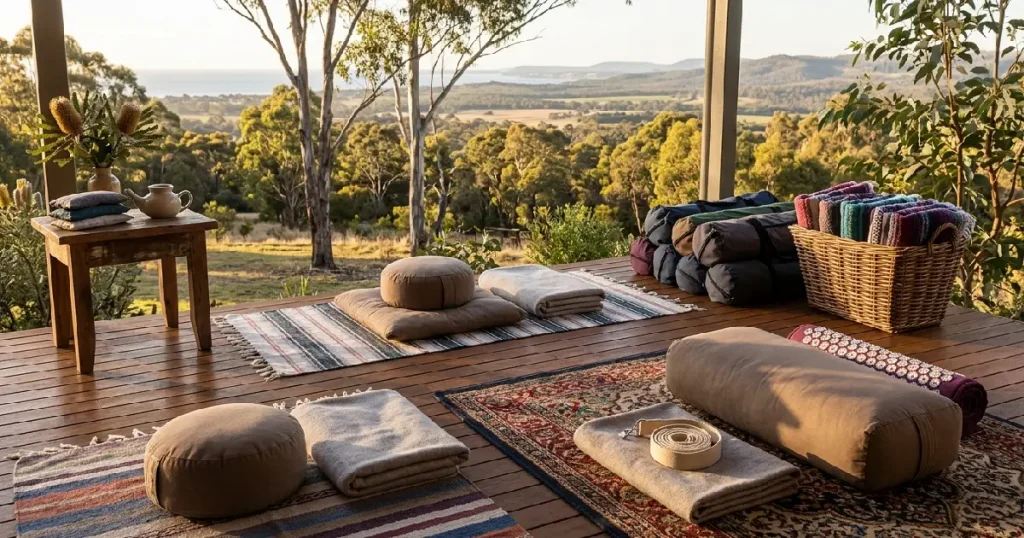
Yoga retreats across Australia may include studio practice, outdoor yoga, meditation, restorative sessions, and workshops in different locations. While this variety can enrich a retreat programme, it also creates practical equipment challenges for retreat organisers.
A set of props that works well in a permanent studio may not be suitable for a beachside session, a grassy outdoor area, a compact retreat room, or a remote wellness venue. Organisers must consider portability, storage, setup time, weather exposure, participant numbers, and the equipment required for each activity.
Buying supplies separately whenever a new retreat is scheduled can make planning more complicated. Missing props, inconsistent equipment, and last-minute orders can create unnecessary pressure for retreat teams.
This is where wholesale yoga supplies Australia can support better preparation. By sourcing a planned range of yoga props and meditation accessories in bulk, retreat operators can build reusable equipment kits, organise supplies by session type, and prepare for different retreat formats.
YogaSourcing supplies yoga and wellness accessories to Australian businesses, including yoga studios, wellness centres, retailers, and brands. Its product range includes yoga mats, blocks, straps, bolsters, meditation cushions, and other wellness accessories. Businesses can explore the range and request details through the Yoga Sourcing Australia supplier.
This guide explains how Australian yoga retreats can plan equipment for different environments, overcome common sourcing problems, and use wholesale purchasing to make retreat operations more organised.
1. Why Do Australian Yoga Retreats Need a Flexible Equipment Strategy?
A yoga retreat is different from a regular studio timetable. The programme may change locations throughout the day, combine several types of practice, or accommodate participants with different levels of experience.
Equipment planning needs to account for these variations rather than treating every session as a standard yoga class.
What equipment challenges do Australian yoga retreats face?
Retreat organisers may encounter several practical problems.
Changing practice environments: Indoor rooms, decks, gardens, and other outdoor locations have different surfaces and space limitations. Equipment must be suitable for the intended environment.
Transport between sessions: Props may need to move from accommodation areas to practice spaces, sometimes more than once a day.
Limited storage: Retreat venues may not have a dedicated equipment room, making compact storage and organised packing important.
Uncertain participant numbers: Late registrations or changes to group size can affect how many mats, blocks, and cushions are needed.
Different session requirements: Meditation, restorative yoga, and active yoga sessions may need different combinations of equipment.
Equipment exposure: Outdoor sessions may introduce moisture, dust, sand, grass, or direct sunlight. Not every product is designed for these conditions.
A planned approach to yoga supplies Australia helps retreat organisers identify these challenges before the event begins.
How can a retreat equipment plan reduce last-minute problems?
Create an equipment checklist for every session type and location. Identify which products will be used repeatedly, which are needed only for specialist activities, and which items must remain indoors.
For example, an outdoor morning session may require a different packing list from an indoor evening meditation. Preparing separate checklists helps the team avoid transporting unnecessary equipment or leaving essential items behind.
A flexible plan also helps retreat operators determine which supplies should be purchased in bulk and which can be sourced locally when needed.
2. What Yoga Supplies Australia Should Retreat Organisers Include in Their Equipment Kits?
The best equipment kit depends on the retreat’s programme, venue, participant numbers, and teaching style. Rather than purchasing every available accessory, organisers should build a practical core inventory and add specialist products where necessary.
Which yoga equipment is useful for different retreat activities?
Product | Potential retreat use | Planning consideration |
Yoga mats | Individual practice during indoor or suitable outdoor sessions | Check dimensions, grip, cleaning requirements, and intended surface. |
Yoga blocks | Support for posture variations and modifications | Consider whether participants need one or two blocks each. |
Yoga straps or belts | Support selected stretching and alignment exercises | Choose practical lengths and easy-to-organise storage. |
Yoga bolsters | Supported postures and restorative sessions | Check dimensions, filling, covers, and transport requirements. |
Meditation cushions | Seated meditation and mindfulness sessions | Consider cushion shape, firmness, and storage volume. |
Eye pillows | Optional relaxation and restorative activities | Check fabric care and hygiene requirements. |
Mat bags or storage bags | Carrying and organising selected equipment | Confirm that dimensions fit the products being transported. |
These are potential uses rather than universal requirements. Retreat instructors should confirm that each product is suitable for the planned activities.
How should retreats separate core supplies from specialist props?
A useful strategy is to divide the inventory into three groups.
Core equipment: Products used in most sessions, such as mats and selected blocks or straps.
Session-specific equipment: Items required for meditation, restorative yoga, or other specialist activities.
Optional extras: Additional accessories used only when the retreat format or instructor requires them.
This approach helps businesses avoid carrying an unnecessarily large equipment collection to every session.
It also makes purchasing decisions easier. Core products can be ordered in quantities that support regular use, while specialist accessories can be added according to the retreat calendar.
Should retreats use the same equipment for indoor and outdoor sessions?
Not necessarily. A product suitable for indoor use may need additional care or protection when used outdoors.
Before using equipment outside, organisers should consider the surface, weather conditions, cleaning instructions, and manufacturer’s guidance. Mats and fabric accessories should not be left exposed to rain, damp ground, excessive heat, or prolonged direct sunlight unless their specifications permit it.
A retreat can maintain a core inventory while preparing separate indoor and outdoor handling procedures.
3. How Can Wholesale Yoga Supplies Australia Help with Indoor and Outdoor Sessions?
Sourcing equipment in bulk can help retreat operators prepare for recurring programmes without starting their purchasing process from scratch each time.
The objective is to create a consistent inventory that can be organised according to the retreat schedule.
How can wholesale yoga supplies simplify retreat preparation?
- Build reusable equipment kits
Organisers can group products into kits for common activities, such as general yoga practice, meditation, and restorative sessions. Reusable kits make packing and counting easier.
- Plan quantities in advance
A bulk order based on expected attendance can help ensure that essential supplies are available before a retreat starts.
- Source complementary products together
A B2B supplier with multiple yoga accessory categories may allow organisers to request pricing for mats, blocks, straps, bolsters, and meditation accessories through one enquiry.
- Standardise equipment where appropriate
Using consistent product types can simplify storage, equipment allocation, and session preparation.
- Prepare for recurring events
Retreat operators that run regular programmes can review previous usage and plan replenishment before the next scheduled event.
These benefits depend on the supplier’s range, availability, order terms, and delivery schedule. Wholesale purchasing should be based on the retreat’s actual requirements rather than the assumption that a larger order is always better.
What should retreat organisers consider when planning outdoor yoga equipment?
Outdoor practice requires additional preparation because conditions can change between locations and sessions.
Consider the following:
- Ground conditions: Check whether the surface is suitable for the planned activity and equipment.
- Weather exposure: Have an alternative location or rescheduling plan for unsuitable conditions.
- Portability: Choose products and storage methods that the team can carry safely and efficiently.
- Cleaning: Establish a process for removing dirt and checking equipment after outdoor use.
- Dry storage: Store fabric products in suitable conditions after use, following the manufacturer’s care instructions.
- Setup time: Organise equipment so the team can prepare the session without unnecessary delays.
Buying equipment is only one part of the solution. A clear transport, setup, and care process helps protect the usefulness of that investment.
4. How Can Retreat Operators Calculate Bulk Yoga Supplies for Different Group Sizes?
An equipment order should reflect the number of participants, the session schedule, and how supplies will be used.
Ordering too little can disrupt a session, while excessive purchasing can tie up funds and create storage problems.
How many yoga props should a retreat order for 20 participants?
The following example illustrates how an organiser might estimate equipment for a retreat group of 20 people.
Equipment | Example quantity | Why it may be needed |
Yoga mats | 20 | One mat per participant for simultaneous individual practice. |
Yoga blocks | 40 | Two per participant when the instructor’s programme uses paired blocks. |
Yoga straps | 20 | One per participant when individual straps are required. |
Meditation cushions | 20 | One per participant for simultaneous seated meditation, if appropriate. |
Bolsters | 10–20 | Quantity depends on the restorative sessions and whether props are shared. |
These are illustrative quantities, not fixed requirements. The final order should account for existing inventory, the instructor’s recommendations, session design, and whether the same products will be needed simultaneously in different locations.
How can retreats avoid ordering too many or too few supplies?
Start with the session schedule, not just the maximum guest count.
For each activity, record:
- Expected participant numbers.
- Products required by each participant.
- Whether equipment can be shared between sessions.
- The time needed to move and reset equipment.
- Existing products that are still suitable for use.
- Additional quantities needed for overlapping sessions or contingency planning.
For example, if the morning yoga group and afternoon meditation group use the same venue at different times, some equipment may be reused after the appropriate checks and preparation. If two sessions run simultaneously, each may need its own dedicated supplies.
This simple calculation can help retreat operators make more informed bulk purchasing decisions.
When should retreat businesses place their wholesale order?
Work backwards from the retreat date. Allow time for supplier confirmation, sample approval if required, production where applicable, shipping, and receiving and checking the order.
For international orders, request a written timeline that distinguishes manufacturing time from transit and delivery time. Avoid assuming that an estimated production period represents the complete delivery window.
5. How Can Yoga Equipment Australia Help Retreats Manage Transport and Storage?
Transport and storage are important operational considerations for retreats that use multiple practice areas or temporary venues.
The right equipment may still be difficult to manage if it is awkward to pack, easily misplaced, or stored in unsuitable conditions.
What makes yoga equipment easier to transport between retreat locations?
Useful considerations include:
Practical dimensions: Check the size of mats, bolsters, and cushions against available transport and storage space.
Organised carrying solutions: Suitable bags and containers can help group related products together.
Clear labelling: Labelled storage areas or equipment bags can make it easier for the team to identify items quickly.
Session-based packing: Pack products according to the next activity instead of mixing every accessory into a single container.
Equipment counts: Use a checklist before departure and after returning to the main storage area.
Care requirements: Follow product-specific cleaning and drying instructions before storing equipment.
These measures help reduce the time spent locating props and make it easier to prepare the next session.
How can bulk yoga supplies support retreats with limited storage?
A retreat venue may have limited space for bulky products, particularly when accommodation, dining, and practice areas share the same building.
Before placing an order, measure the available storage area and consider the packed dimensions of the equipment. Prioritise products that serve recurring needs, then add specialist items according to the retreat calendar.
Where possible, discuss product dimensions, packaging, and order quantities with the supplier before confirming a purchase.
The goal is to create a practical inventory that fits the venue’s operating conditions—not simply to maximise the number of products on hand.
6. What Should Australian Retreats Check Before Ordering Wholesale Yoga Supplies?
A supplier’s quoted price is only one part of a purchasing decision. Retreat businesses should also consider product suitability, order terms, shipping, and whether the equipment will meet the requirements of their planned activities.
Which questions should retreat organisers ask a wholesale supplier?
Before ordering, confirm the following:
- Product details: What are the dimensions, materials, construction, and available options?
- Minimum order quantities: What is the MOQ for each product, and can different product types be combined?
- Samples: Can the retreat review a sample before placing a larger order?
- Bulk pricing: Are volume-based prices available, and what does the quotation include?
- Customisation: Are selected colours, logos, or packaging options available?
- Production time: How long will the order take to manufacture, if applicable?
- Shipping: What shipping methods are available to the Australian destination?
- Import costs: Which duties, taxes, or other charges may apply, and who is responsible for them?
- Quality procedures: How are products inspected, and how are issues handled?
- Care information: Are suitable cleaning and storage instructions available?
Getting these details in writing helps businesses compare suppliers more fairly and plan the order around their retreat schedule.
Why should retreats check product suitability before buying in bulk?
A product that looks suitable in a catalogue may not meet the needs of a particular retreat.
For example, a bolster’s dimensions may affect how easily it fits into storage, while a mat’s surface and care instructions may affect its suitability for a particular setting.
Where practical, request samples of important products and assess them against the retreat’s intended use. Confirm the product specifications and relevant documentation before approving a larger order.
How should retreats assess delivery timelines for Australian destinations?
For orders sourced internationally, ask the supplier to clarify the expected manufacturing period, dispatch date, transit estimate, and delivery arrangements.
Build in a reasonable buffer for receiving the order, checking quantities, and addressing any discrepancies before the retreat begins. The appropriate buffer depends on the order, shipping method, and destination.
Do not rely on a general estimate without confirming the current timeline for the specific products and order.
7. How Can YogaSourcing Support Australian Yoga Retreat Businesses?
YogaSourcing’s Australian supplier page describes a B2B range of yoga props and wellness accessories for studios, wellness centres, retailers, and brands. Listed categories include yoga mats, blocks, straps, bolsters, meditation cushions, and other meditation and wellness products. The page also outlines bulk ordering and selected customisation options.
For retreat operators, a supplier with several relevant product categories can make it easier to enquire about a coordinated equipment order.
What should Australian retreats prepare before requesting a quote?
To receive a more relevant quotation, prepare the following information:
- Retreat format
Explain whether the programme includes indoor yoga, outdoor practice, meditation, restorative sessions, or several activity types.
- Expected participant numbers
Provide the expected group size and indicate whether different sessions will run simultaneously.
- Product and quantity list
List the required items, estimated quantities, and any specific dimensions or materials that matter.
- Delivery destination and deadline
Share the Australian delivery location and the date by which the equipment needs to be received.
- Customisation requirements
If the retreat requires branding or particular colours, ask whether these options are available for the selected products and quantities.
- Budget and ordering preferences
Request pricing and clarify minimum order quantities, shipping costs, and other applicable charges.
With these details, the supplier can respond more accurately, and the retreat operator can assess whether the proposed order fits the programme and budget.
Explore the Yoga Sourcing wholesale yoga supplies for Australia page to review the available categories and enquire about your retreat’s bulk requirements.
8. Frequently Asked Questions
Common options include yoga mats, blocks, straps, bolsters, and meditation cushions. The right selection depends on the programme, group size, venue, and suitability of each product for the intended environment.
Wholesale sourcing can help retreats plan quantities in advance, request bulk pricing, and explore several equipment categories through a B2B supplier. The value depends on product suitability, total order costs, delivery arrangements, and expected usage.
Estimate the number of participants in each session, identify the props needed per person, and determine whether equipment can be reused between activities. Then account for existing inventory, simultaneous sessions, and any additional requirements.
Confirm product specifications, minimum order quantities, sample availability, production and shipping timelines, applicable import charges, quality procedures, and care instructions. Request a written quotation before placing the order.
Some suppliers offer custom branding, colours, or packaging for selected products. Retreat operators should confirm availability, minimum quantities, pricing, sample options, and lead times directly with the supplier.
9. Conclusion
Planning yoga equipment for indoor and outdoor retreat sessions requires more than purchasing a set of props. Australian retreat operators need to consider the activities on the schedule, participant numbers, venue conditions, transport, storage, and equipment care.
A structured approach to yoga supplies Australia can help retreats prepare reusable equipment kits, organise supplies by session type, and reduce last-minute purchasing pressure. Wholesale sourcing can support this process when the products, quantities, order terms, and delivery schedule match the business’s needs.
Before placing an order, review the retreat calendar, prepare an equipment checklist, and confirm the product details and full delivery costs with the supplier.
Planning your next retreat? Explore the Yoga Sourcing Australian supplier to review the available yoga and wellness accessories and enquire about bulk supply options.